Give people a reason.
Explain what matters, who they will hear from, and why joining is worth their time.
Why Cadence?
Your next message enters a crowded day. The opportunity is to give people a reason to notice, a way to connect, and a clear invitation to participate.
Explore the approach →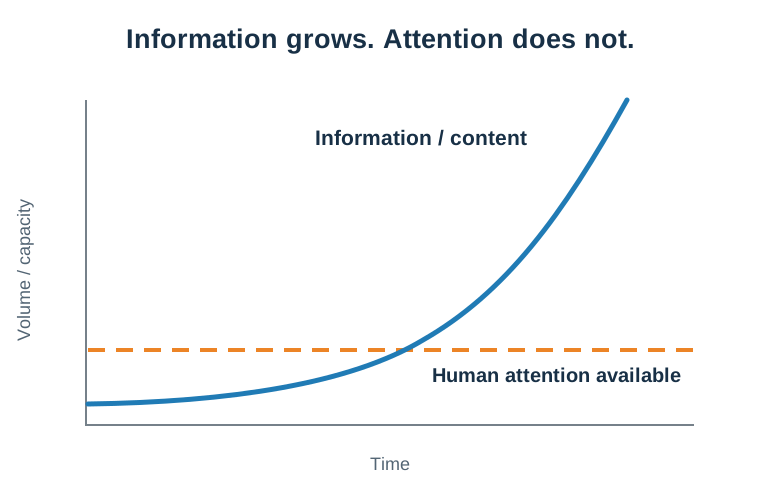
The attention problem
Sending a message makes it available. It does not tell you whether someone noticed it, understood it, or felt a reason to respond. A communication plan needs to account for the audience’s time and attention.
The graphic illustrates that tension conceptually. It does not plot measured growth or a fixed quantity of attention. Its point is the gap between what can be sent and what people can take in.
Why coordinated multichannel?
Using several channels creates more opportunities to reach people. Coordination gives those contacts a shared purpose: each prepares for, reinforces, or follows through on the others.
Explain what matters, who they will hear from, and why joining is worth their time.
Make room for a real voice, a clear story, and questions that matter to the audience.
Send the relevant information and a clear next step while the conversation is still fresh.
Illustrative sequence. The channels, timing, and number of contacts depend on the audience and purpose.
Why voice?
A live conversation adds presence and responsiveness. Leaders can explain, listen, and answer questions in the same moment. Participants can hear what others want to know.
That gives voice a distinct role within the plan. Email, text, digital, mail, and the website can prepare people for the conversation and help them act afterward.
Explore Cadence Phonecasts →Put the approach to work
Presidential conversations, alumni listening, and leadership accessibility.
FundraisingGiving-day momentum, cultivation, appeals, and stewardship.
Audience activationCoordinated services for updates, events, membership, and other engagement goals.
Read & share
“Voice is the Blindspot in Creating the Attention Advantage” outlines the strategic case for attention, trust, human connection, and voice’s role in a coordinated plan.
A perspective brief from Cadence Communications. Free to read without completing a form.
Start a conversation
Tell us about your audience, your goal, and the timing you have in mind. We’ll talk through the right format and next step.
Mickey Munley
Founder, Cadence Communications
Former vice president for advancement, Grinnell College